 China Neodymium And Ferrite Magnets Manufacturer & Supplier



During the actual business communication process, many customers tend to ask a series of questions when selecting injection molded magnets. Xiaofu has compiled several frequently asked questions, hoping to be of help to you.
Q1: What is the magnetic performance of injection molded magnets?
The magnetic properties of injection molded magnets are indeed inferior to those of sintered magnets of the same material. This is because after mixing magnetic powder with resin, the magnetic filling ratio is typically between 60% and 90% (by volume), diluting the overall magnetic energy product. For example, the maximum magnetic energy product of injection molded neodymium iron boron is generally between 5 and 8 MGOe, making it suitable for applications where the magnetic field strength is not extremely critical, but where the shape/integration requirements are high.
Q2. What complex shapes can be made?
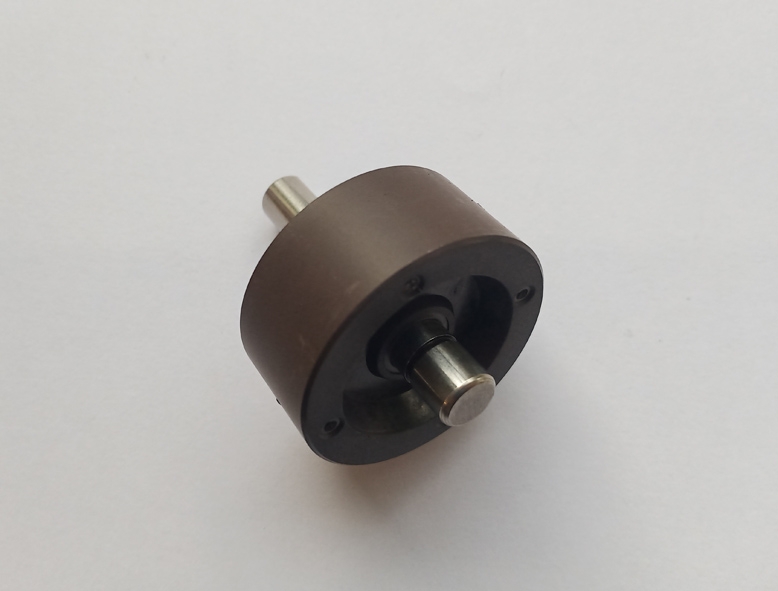
The greatest advantage of injection molded magnets lies in their high degree of shape freedom. Steps, grooves, pillars, and holes are all feasible, and it is also possible to embed metal shafts/cores within the injection molded material. You can find various injection molded magnets with complex structures in the injection molded magnet section of our website.
Q3: Can injection-molded magnets be magnetized with multiple poles? What is the level of precision?
Absolutely. Injection-molded magnets are ideally suited for multi-pole magnetization; configurations with over ten or twenty poles are quite common. For more precise applications, they can even be magnetized with hundreds of poles. In fields such as magnetic encoders and angle sensors, injection-molded magnets have become the mainstream choice.
The image below shows an injection-molded ferrite magnetic rotor.
Q4: What is the temperature resistance of injection-molded magnets? Do they demagnetize?
Approximately 100–150°C; PA-based materials can withstand temperatures of about 100–120°C, while PPS-based materials can withstand temperatures of up to approximately 150°C.
Q5: Do injection-molded magnets require plating? Will they rust?
No. The magnetic powder is completely encapsulated by the plastic, providing excellent water resistance and corrosion resistance.
Q6. What are the lead times and minimum order quantities?
The mold development cycle is approximately 4–8 weeks (depending on the mold’s complexity). Mass production lead times are approximately 2–4 weeks, and the minimum order quantity is typically 1,000–5,000 units.
The above are the TOP 6 frequently asked questions about injection molded magnets compiled by our team. If your company has projects that require this type of magnet, please contact Caric for a quotation and sample testing.
More information on injection-molded magnets;
Difference Between Injection Molded Magnets and Rubber Magnets
Injection molded ferrite vs injection molded neodymium magnets
Injection molding magnets how to increase the surface magnetism