 China Neodymium And Ferrite Magnets Manufacturer & Supplier



When commissioning custom magnets, many customers are faced with a choice: for the same magnet material, should the diameter or thickness be 2 mm or 1.6 mm? What exactly is the difference? We will explain this in more detail below.
If we are referring to circular magnets with diameters of 2 mm and 1.6 mm, and assuming they are of the same thickness, material and grade, the 2 mm magnet has a larger volume and can store more magnetic energy; consequently, its magnetic force is usually stronger than that of the 1.6 mm magnet.
If we are talking about a thickness of 2mm and a thickness of 1.6mm, while keeping the diameter the same, the biggest difference is that the magnetic circuit length of the magnet is different. Generally speaking, a 2mm thick magnet has more abundant magnetic flux and a higher surface magnetic field, which can provide greater adsorption force under the same installation conditions, while allowing for a larger working air gap. Therefore, it is more widely used in products such as motors, sensors, and magnetic structures.
2mm diameter hollow cylindrical magnet
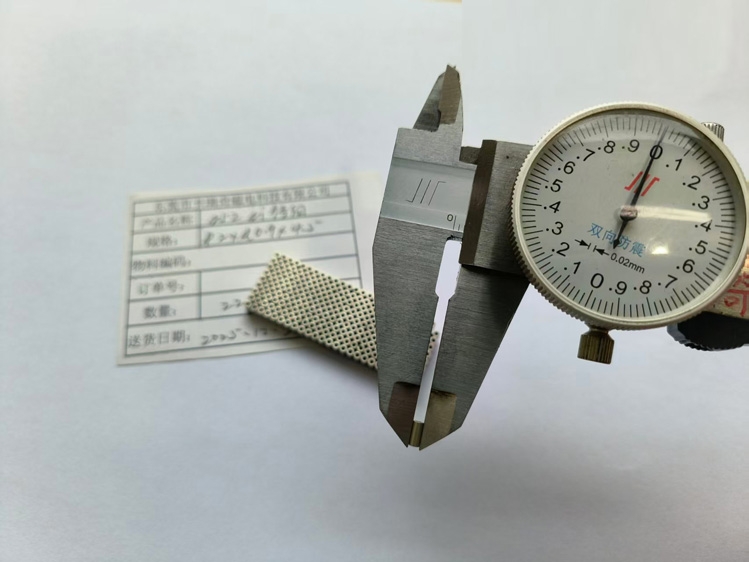
Differences in size result in differences in cost. Whether the diameter or thickness increases, the amount of magnetic material required also increases; therefore, 2mm magnets are usually slightly more expensive than 1.6mm magnets.
How should you choose?
If your product requires greater magnetic force and higher stability, we recommend opting for the 2mm specification. However, if your product needs to be lightweight, slim and compact, or if installation space is limited, the 1.6mm magnet would be more suitable.
We can process magnets with diameters, thicknesses, and lengths of 2mm or 1.5mm. If you have specific dimensions, you can send them to our website customer service for a quotation and provide samples.
Magnets in sizes relevant to the article;