 China Neodymium And Ferrite Magnets Manufacturer & Supplier



In practical product applications, besides paying attention to the magnitude of magnetic force, it is also necessary to consider the impact of working environment temperature on magnetic properties. Today, I saw a netizen asking about the impact of 90-degree temperature on the magnetism of magnets.
Next, we will introduce sintered neodymium-iron-boron N-series (mainly) and sintered ceramic ferrite.
N-series neodymium magnets possess advantages such as high magnetic performance and high cost-effectiveness. However, the temperature resistance level of ordinary N-series neodymium-iron-boron magnets is typically around 80°C (without the addition of heavy rare earths). When the operating temperature reaches 90°C, it has already exceeded its recommended usage temperature. At this point, the remanence of the magnet decreases as the temperature rises, leading to a reduction in magnetic flux density and a decrease in coercivity. Long-term exposure to such a temperature environment can result in irreversible demagnetization, affecting the stability of equipment or products.
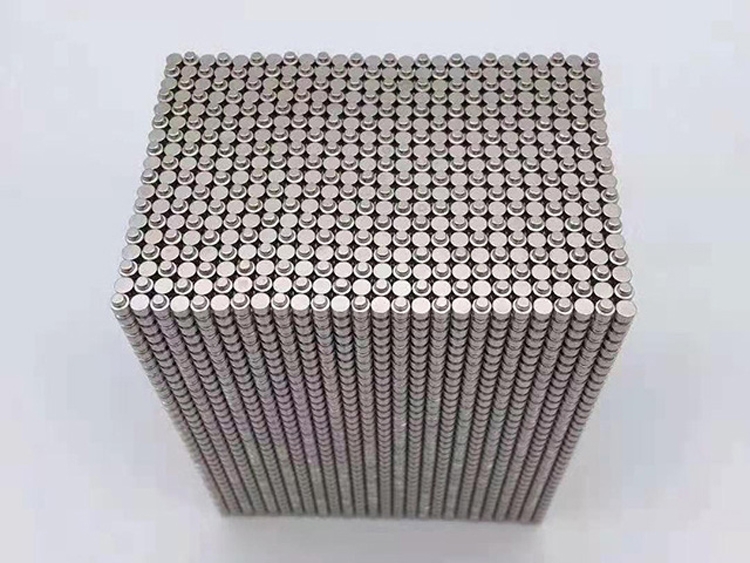
Neodymium disc top hat step magnets
If long-term or repeated use at this temperature is required, it is recommended to switch to high coercivity grades such as M, H, SH, etc. (with a rated operating temperature up to 100~150℃).
If you are using ferrite material (such as sintered ferrite), it is safe and stable to operate at 90℃, so there is no need to worry.
The above is an introduction to the impact of 90-degree temperature on the magnetic properties of commonly used neodymium-iron-boron and ferrite magnets. If high temperature stability is required, cost sensitivity is a concern, and a lower magnetic energy product is acceptable, ferrite is a good choice in the 90°C scenario.
Recommended Browsing