 China Neodymium And Ferrite Magnets Manufacturer & Supplier



Permanent magnet materials have numerous applications in motor vehicles, such as in drive motors, various sensors, loudspeakers, instrument panels, electrical appliances and magnetic fasteners. Today, we will discuss several issues concerning permanent magnet materials used in automotive EPS systems.
1. Why are sintered neodymium-iron-boron magnets commonly used in automotive EPS systems rather than ferrites?
EPS (Electric Power Steering) places extremely high demands on the motor’s power density, response speed and steering precision. Sintered neodymium-iron-boron magnets offer advantages such as high residual magnetism, high magnetic energy product and high coercive force. They can provide a stronger magnetic field for the same volume, enabling the motor to deliver greater torque whilst reducing its size and weight. Ferrite, on the other hand, although lower in cost and offering good corrosion resistance, has significantly inferior magnetic properties.
2. Which grades of magnetic material are typically used in EPS motors?
Commonly used grades of sintered neodymium-iron-boron for EPS include N35SH, N38SH, N40SH, N42UH and N45UH.
3. What performance criteria must permanent magnet materials for EPS meet?
Residual magnetisation (Br): a higher value increases the motor’s output torque.
Coercivity: a higher value prevents demagnetisation at high temperatures.
Maximum energy product: a higher value improves motor efficiency
Temperature resistance: must meet the requirements of the automotive operating environment.
Neodymium-iron-boron wafer-shaped magnets for EPS
Magnets in EPS systems are often coated with epoxy.
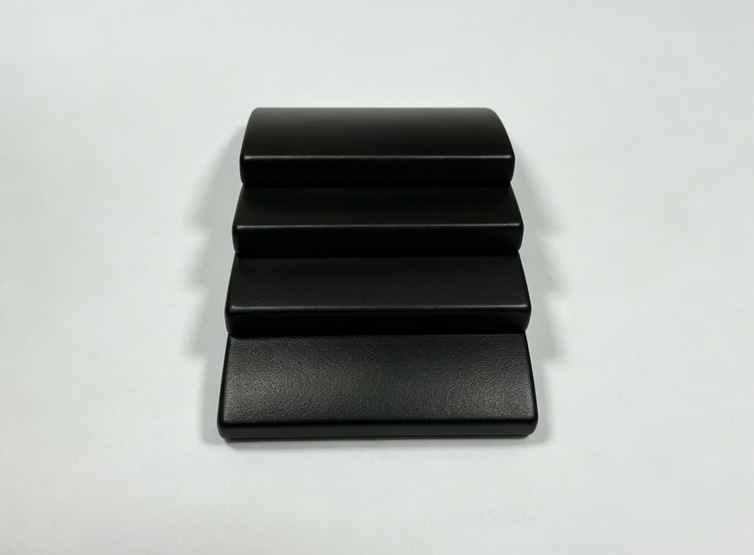
4. Why do many EPS magnets opt for an epoxy surface treatment?
Sintered neodymium-iron-boron contains a significant amount of iron, making it susceptible to oxidation and corrosion in environments such as high humidity and salt spray. An epoxy coating provides effective protection for the magnets, thereby extending the product’s service life.
5. Do the permanent magnet materials in EPS motors demagnetise over time?
Under normal circumstances, sintered neodymium-iron-boron magnets that comply with automotive standards will not demagnetise significantly over time. If demagnetisation does occur, it is usually related to excessive temperatures, short circuits or overcurrent, strong external magnetic fields, or substandard magnet quality.
6. What are the common shapes of EPS magnets?
The main types of magnets commonly used in EPS motors are arc shaped (magnetic tiles) and ring-shaped multi-pole magnets.
Should your company require a quotation for magnets or the production of samples, please send us an enquiry.
Recommended articles;