 China Neodymium And Ferrite Magnets Manufacturer & Supplier




Let's first determine one thing when sticking magnets: whether the adhesive in this area can bear weight and whether there is vibration. Only for temporary positioning, instant glue is sufficient. To withstand long-term stress, vibration, or high temperature environments, epoxy structural adhesive is necessary. The surface coating of neodymium iron boron is dense and smooth, and regardless of the type of adhesive used, the bonding surface must first be degreased and roughened.
Instant drying glue sets in a few seconds to tens of seconds, suitable for quick positioning of small magnets, but the glue layer is hard and brittle, and is prone to cracking under long-term stress or vibration.
The shear strength of epoxy structural adhesive can reach over 20MPa, and it is temperature and water resistant, but complete curing at room temperature often takes 24 hours.
Ordinary instant dry adhesive generally has a long-term temperature resistance of no more than 80 ℃, and exceeding this temperature may cause softening and failure.
Magnet fixed to metal shaft
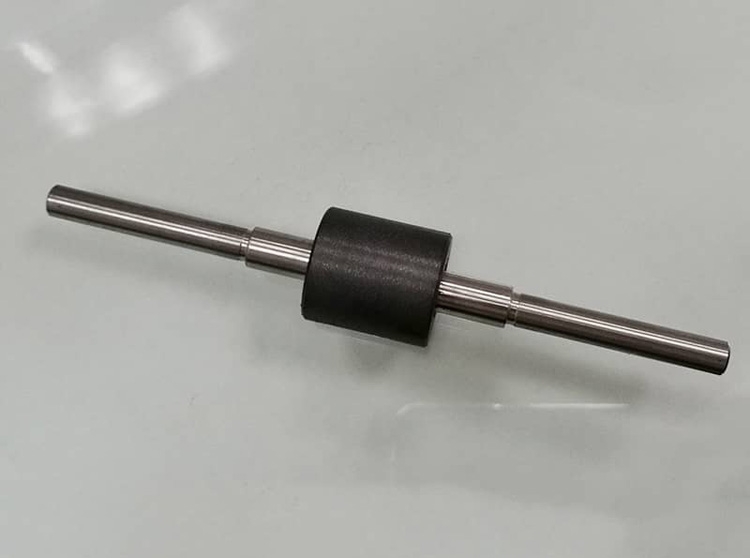
In terms of product applications, if the adhesive is used for toys, magnetic fasteners in packaging, or tooling alignment—where small-area components are not subjected to stress—instant-curing adhesive is sufficient.
For motor magnets, sensor magnetic components, or applications involving long-term load-bearing, we recommend two-component epoxy structural adhesive.
For outdoor, high-temperature, or humid environments, epoxy structural adhesive is recommended; instant-curing adhesive is not suitable.
Precision cosmetic parts: Choose a low-whitening instant adhesive or clear epoxy to prevent surface haze.
Magnets often come from the factory coated with release agents and cutting oils; applying adhesive directly will likely cause it to peel off. You must wipe them clean with alcohol or acetone and let them dry before applying the adhesive. If the nickel-plated surface is smooth, it can be lightly sanded, but do not remove the entire plating layer, as this will cause the magnet to rust. Keep the adhesive layer thickness between 0.05 and 0.2 mm; if it is too thin, it may crack due to thermal expansion and contraction. For bonding rings, apply a continuous bead of adhesive to prevent breaks. Secure the parts with clamps during epoxy curing, and avoid subjecting them to stress prematurely.
Content related articles;