 China Neodymium And Ferrite Magnets Manufacturer & Supplier



During long-term operation of an electric motor, it is not uncommon for the rotor magnets to come loose. This not only affects the motor’s performance but can also lead to damage to the entire unit. So, what are the causes of magnet (magnetic steel) detachment? We’ve compiled a list, and it boils down to these few reasons.
1. Glue issue
Improper selection of adhesive is the primary cause of magnet detachment, such as using glue with insufficient temperature resistance (e.g., below 120°C) or inadequate shear strength.
2. Excessive centrifugal force (high rotational speed)
The centrifugal force generated by high-speed rotation is also a common cause of magnet detachment. If the fixation method of the magnet is not adequately considered during design, relying solely on glue may lead to detachment.
3. Unreasonable coordination structure between magnet and rotor
If there is no anti slip design on the surface of the rotor (such as slotting, positioning steps, dovetail grooves, etc.), or if the gap between the magnet and the rotor is too large and only filled and fixed with glue, the impact and vibration resistance is poor, and it is easy to cause displacement or even detachment.
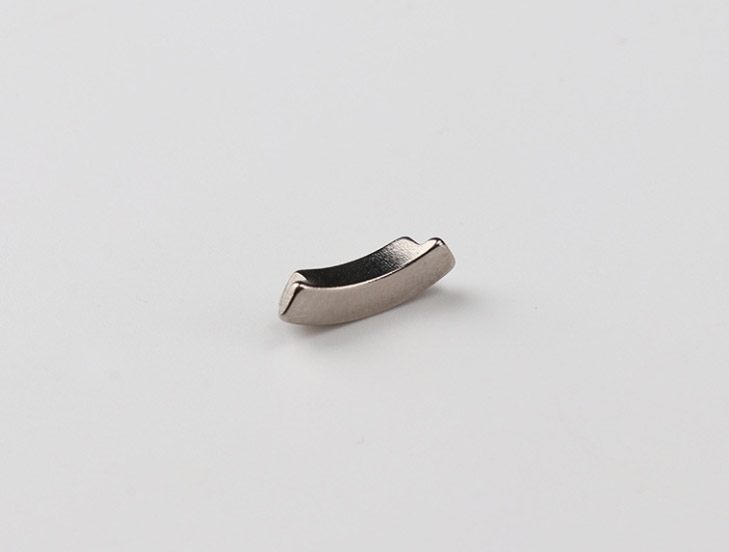
Custom-shaped arc-segment rare-earth magnets
4. The surface of the magnet and rotor is not clean
If there is oil or moisture between the two, it will seriously affect the adhesion of the glue and increase the risk of detachment.
5. Improper operation
Such as uneven dispensing, assembly deviation, and insufficient curing time.
The above are the main reasons for the detachment of motor rotor magnets. For motors with high speed or high reliability requirements, it is recommended to use a composite solution of "adhesive+mechanical fixation (such as sleeves or slots)", and to use high temperature resistant and high-strength adhesive. The assembly process should be strictly controlled to reduce the risk of magnet detachment from the source.
Selection of motor rotor magnets;