 China Neodymium And Ferrite Magnets Manufacturer & Supplier



Aluminum-nickel-cobalt magnets find extensive applications in military equipment, electronics, and automotive components due to their high remanence (up to 1.35 T) and excellent temperature stability. However, compared to other magnet types, AlNiCo magnets exhibit relatively low coercivity. This article focuses on the effects of reverse magnetic fields on aluminum-nickel-cobalt magnets.
When an AlNiCo magnet is subjected to a reverse magnetic field below its coercivity, its remanence decreases, resulting in weakened magnetism while the original magnetic poles remain intact. This partial demagnetization is typically reversible, and most magnetic properties can be restored through remagnetization. Nevertheless, frequent or prolonged exposure to low-intensity reverse magnetic fields may cause gradual deterioration of magnetic properties, thereby compromising their application stability in precision instruments or electric motors.
If the strength of a reverse magnetic field exceeds the coercivity of an AlNiCo magnet, the magnet will undergo complete demagnetization. The original north and south poles will disappear, and the magnetic force will drop to nearly zero. This demagnetization is typically irreversible; even if remagnetized, it is difficult to fully restore the magnet's magnetic properties to its factory state. Therefore, during design and use, strong reverse magnetic fields must be kept away from AlNiCo magnets as much as possible.
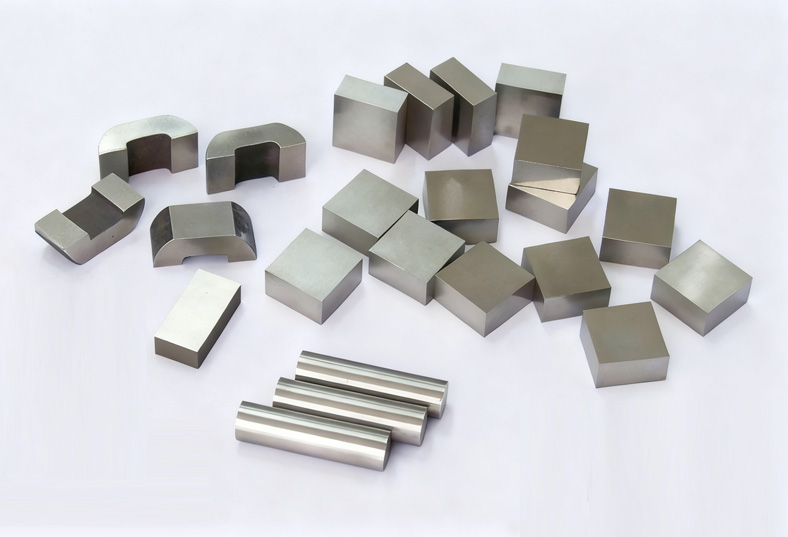
Aluminum-Nickel-Cobalt Magnets in Various Shapes
In high-temperature environments, the coercivity of AlNiCo magnets further decreases, making them more susceptible to demagnetization by opposing magnetic fields. In practical applications such as motors, sensors, or instrumentation, the stability of AlNiCo magnets may be compromised if subjected to reverse currents or external magnetic field interference. Therefore, when used in such conditions, shielding or isolation measures are typically required to protect the magnets from opposing magnetic fields.
In general, the effect of reverse magnetic fields on AlNiCo magnets primarily manifests as magnetic weakening or even complete demagnetization. This characteristic stems from their low coercivity and brittle, hard material properties. In industrial applications and precision equipment design, this trait must be fully considered. Damage to AlNiCo magnets from reverse magnetic fields should be prevented through proper layout and shielding measures, thereby ensuring their long-term stable magnetic performance and reliability.
Related articles;
Alnico vs Ferrite Magnets in Speakers