 China Neodymium And Ferrite Magnets Manufacturer & Supplier



When many people first come into contact with Hall sensors, they often wonder if there is a "front and back" issue with the magnet, whether it should be placed facing the front or the back. Let's delve into this.
Actually, there is such a thing. The "positive and negative" sides of a magnet are what we commonly refer to as the N-pole and S-pole. The Hall sensor works by sensing the magnetic field changes between these two different magnetic poles, so the orientation of the magnet is very important.
For example, some Hall sensors only respond to the N pole, while others are sensitive to the S pole, and some require alternating changes between the N and S poles to function properly. If the orientation of the magnet is reversed, the device may lose signal or even fail to start properly.
Radial cylindrical neodymium magnet
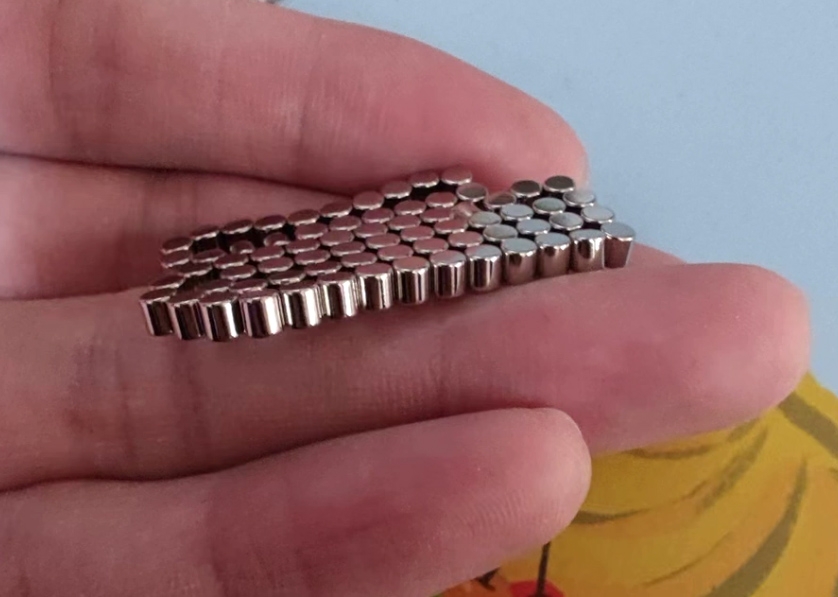
In practical applications, Hall sensors are often used in conjunction with magnets of various materials, such as neodymium-iron-boron magnets, ferrite magnets, and composite injection-molded magnets. In products such as fans, motors, encoders, and automotive sensors, multi-pole magnetic rings are frequently employed, including 4-pole, 8-pole, 12-pole, etc., with magnetic poles arranged alternately as 1N pole and 1S pole.
The above is an introduction about whether the magnet of the Hall sensor has a positive and negative side. If your company needs Hall sensor magnets, please contact our website customer service for a quotation and sample provision.
Recommended products;
Speed Sensor Multi-pole Ring Magnet 16mm x 10mm x 9mm
1x1mm neodymium magnet ideal for sensor and headsets
Door alarm sensor ferrite magnet block L 29mm x 8mm x 8mm
Similar questions
Do Hall effect sensors have to be magnet triggered?
Which side of the magnet should be induced by the Hall sensor?
What type of sensor requires a magnets?
What if the magnets of the hall sensor is easy to install wrongly?