 China Neodymium And Ferrite Magnets Manufacturer & Supplier



Motor magnetic strips are usually used as strip magnets in motors, commonly used in permanent magnet motors, to provide a stable magnetic field. Currently, the two commonly used types of motor magnetic strips are anisotropic rubber magnetic strips and sintered neodymium magnetic strips. Below is a more specific introduction.
Anisotropic Flexible Rubber Magnets
Anisotropic rubber magnets are typically materials made by mixing rubber with magnetic powders (such as ferrite), exhibiting directional magnetic properties. They are commonly used in applications requiring low cost and high flexibility.
80mm length motor rubber magnetic strip
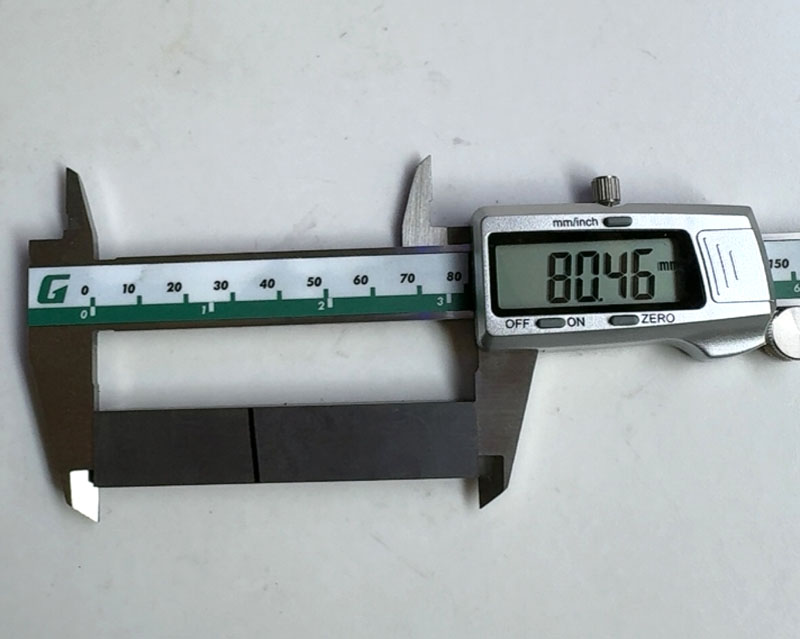
The primary characteristics of this material are its flexibility and malleability. It performs well under impact or external vibration, resists shattering, and offers excellent durability. Additionally, its low cost makes it suitable for small motors, toy motors, motor vibrating discs, and low-power motors in household appliances, such as fan motors.
Neodymium iron boron magnetic strip
Neodymium iron boron magnetic strips (neodymium bar magnets) are exceptionally powerful rare-earth permanent magnets, commonly used in electric vehicle motors and linear motors.
Illustration shows a 40mm neodymium block bar magnet.

Neodymium magnetic strips possess significantly stronger magnetic properties than rubber magnetic strips, making them more suitable for motors with high-performance requirements. However, they also have drawbacks, such as higher cost, greater brittleness, and lower impact resistance. Typically, grades above M are recommended, such as H grade or SH grade.
The above covers what motor magnetic strips are and an introduction to the two commonly used materials. In addition to magnetic strips, many customers also opt for curved, ring-shaped, wedge-shaped, and other forms.
Related Products;
Fan Motor Flexible Ferrite Rubber Magnetic Tape 202.8x22x3.5mm