 China Neodymium And Ferrite Magnets Manufacturer & Supplier



Rubber magnetic strips are flexible magnetic materials that can be cut to any size. They are used in window screens, door curtains, sensors, refrigerators, motor vibrating feeders, and more. Today, we'll introduce their manufacturing process.
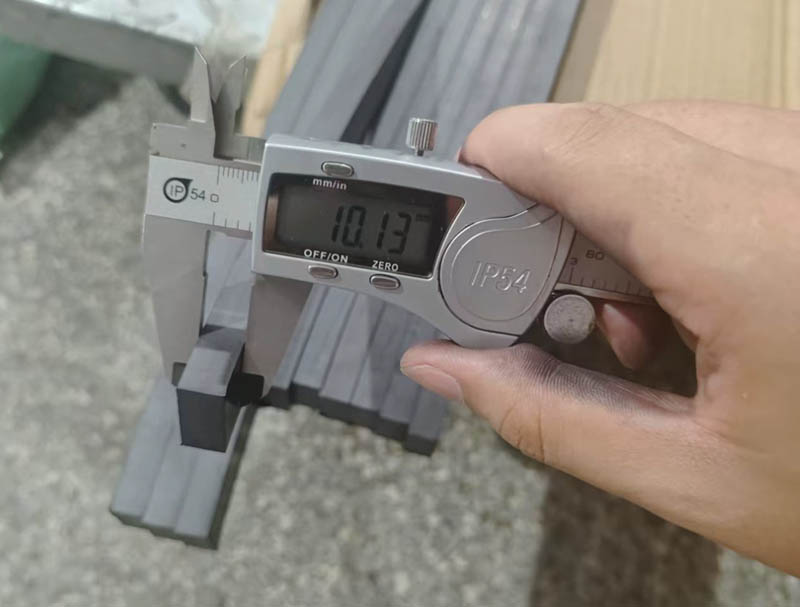
10mm thick anisotropic rubber soft magnetic strip
1. Ingredients
Mix magnetic powder, rubber, and other additives (such as fillers, adhesives, etc.) in proportion, most of which use strontium ferrite magnetic powder.
2. Compounding
The mixture is thoroughly stirred and homogenized using compounding equipment. The purpose of compounding is to uniformly disperse various raw materials throughout the rubber, forming a consistent magnetic rubber compound.
3. Extrusion or Calendering
The mixed magnetic rubber compound is processed through an extruder or calender to form the desired shape, such as strips or flat sheets.
4. Vulcanization
Rubber is cured through vulcanization under controlled temperature and pressure. This critical step in rubber processing enhances the material's strength and elasticity.
5. Cooling and Curing
After vulcanization, the rubber strips must be cooled, typically through water cooling or air cooling, to reduce their temperature to room temperature.
6. Cutting or Forming
Cut the cooled magnetic rubber strips according to specifications to achieve the required length and shape.
7. Magnetization and Inspection
Magnetize flexible rubber strips after cutting or forming to impart the required magnetic properties.
8. Packaging and Storage
Magnetic rubber strips that pass inspection are packaged and stored in the warehouse.
The above outlines the overall manufacturing process. Each step requires strict control of process parameters and quality standards to ensure the performance and quality of the final product.
View or select flexible rubber magnets: https://www.couragemagnet.com/rubber-magnet/