 China Neodymium And Ferrite Magnets Manufacturer & Supplier



In magnetic materials, ferrite is widely utilised in motors, sensors, electrical appliances, and electroacoustic products due to its low cost, stable magnetic properties, and excellent temperature resistance. Some customers may be concerned whether ferrite magnets are prone to rusting or oxidation like metallic iron, thereby affecting their magnetic performance or appearance. This article therefore provides a detailed explanation of this matter.
What is ferrite?
It is not metallic iron, but rather a class of iron-containing ceramic magnetic materials, primarily sintered from Fe₂O₃ (iron oxide) and other metal oxides such as MnO, ZnO, and NiO. Being oxides by nature, they are already in a highly stable oxidised state chemically. This fundamental property means they are not readily oxidised further and will not rust like metallic iron.
Image shows arc segment sintered ferrite
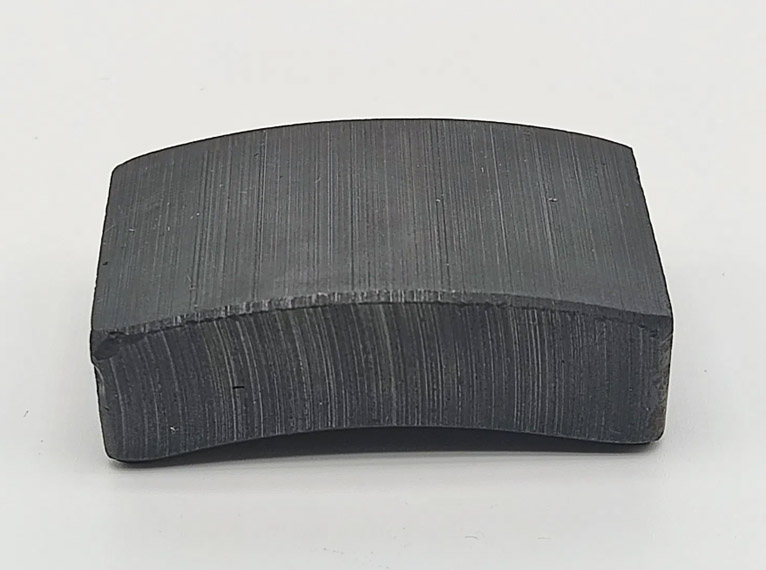
Although ferrites are generally resistant to oxidation, exposure to strong acids such as hydrochloric acid or nitric acid will cause them to dissolve rather than oxidise. At extremely high temperatures (far exceeding operating temperatures), magnetic properties may deteriorate, requiring particular attention.
Let me give you a few examples. For example, the ferrite magnetic tile of a motor operates in a high temperature, high humidity, and high airflow environment all year round, but it will not show rust spots similar to metallic iron for decades, indicating its strong antioxidant capacity.
The automotive chassis environment is harsh, subject to rainwater, silt, salt, and temperature fluctuations. Nevertheless, the multi-pole ferrite magnetic rings used in vehicle wheel speed sensors continue to operate reliably for years without corrosion.
The MnZn and NiZn ferrite cores commonly found in inductors and transformers remain unchanged in appearance even after years of exposure to air.
Therefore, ferrite is not readily oxidised. In applications such as motors, sensors, transformers, medical devices, and loudspeakers, selecting ferrite magnets not only offers a low cost but also provides exceptional environmental stability, making it a durable and reliable magnetic material.
Further questions and answers on ferrites;