 China Neodymium And Ferrite Magnets Manufacturer & Supplier



In high-performance motors, sensors, and precision magnetic components, neodymium iron boron magnets not only require high magnetic performance (such as remanence Br, coercivity Hcj), but also their machining tolerance control is a key factor determining the final product performance. Minor changes in size, shape, and positional tolerances can have a direct impact on magnetic circuit design and overall performance.
The geometric dimensions of a magnet directly determine its effective magnetic volume, which is the core parameter that affects the output of magnetic flux. When there are large tolerances in the thickness, outer diameter, or inner hole size of the magnet, it will cause the actual magnetic flux to deviate from the design value. For example, the tolerance in the thickness direction will directly affect the air gap magnetic density, thereby affecting the output torque and efficiency of the motor.
In addition to dimensional accuracy, the shape tolerances of magnets (such as flatness, straightness, parallelism) have a significant impact on the uniformity of magnetic fields. When there is a shape error in the magnet, problems such as uneven magnetic field distribution, abnormal local magnetic density, generation of additional harmonics, affecting the electromagnetic performance of the motor, increasing eddy current losses, and reducing efficiency may occur. In high-speed motors or high-precision servo systems, this uneven magnetic field may also cause problems such as increased vibration and increased noise (degraded NVH performance).
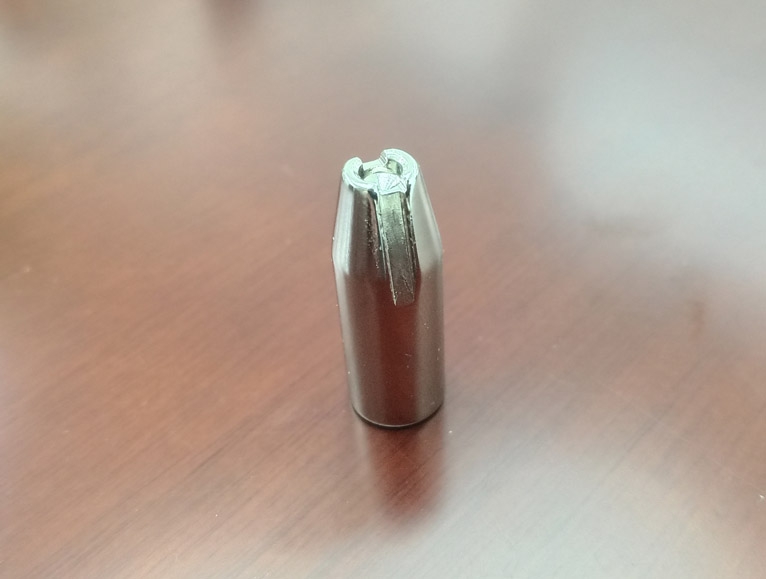
Similar products; Conical bullet shaped custom shaped strong ndfeb magnet
In addition to geometric dimensions and shape tolerances, there are also positional tolerances such as concentricity, symmetry, and runout that directly determine the assembly accuracy of magnets in components, thereby affecting the symmetry of magnetic circuits. Typical impacts include concentricity deviation → rotor eccentricity → uneven air gap → torque fluctuation. In multipole magnetic rings (such as 62 pole and 64 pole encoder magnetic rings), position accuracy is particularly critical. Once the deviation is too large, it will directly affect the accuracy of angle analysis.
The performance of ndfeb magnets depends not only on the material itself but also heavily on machining precision. As motors and sensors evolve toward higher speeds, greater precision, and smaller sizes, tolerance control has become one of the key factors determining product performance and reliability. Only when both magnetic properties and machining precision are ensured can the optimal performance of the entire system be achieved.
Other introductions to magnet tolerances;