 China Neodymium And Ferrite Magnets Manufacturer & Supplier



During the installation and use of magnetic float level gauges, the orientation of the float magnet is a frequently overlooked yet critical detail that directly impacts measurement stability and accuracy. So, should the float magnet be installed facing up or down?
In most magnetic float level gauge designs, a magnet is integrated inside or on one side of the float to enable magnetic coupling with external flip-flops, reed switches, or Hall sensors.
The correct installation method is: the side containing the magnet should face upward. This orientation aligns with the gauge's structural design and magnetic field matching requirements, facilitating natural and stable vertical movement of the float as liquid levels change.
When the magnet faces upward, the float's center of gravity is more evenly distributed. This ensures uniform force distribution within the liquid, resulting in minimal resistance during vertical movement and enhanced responsiveness.
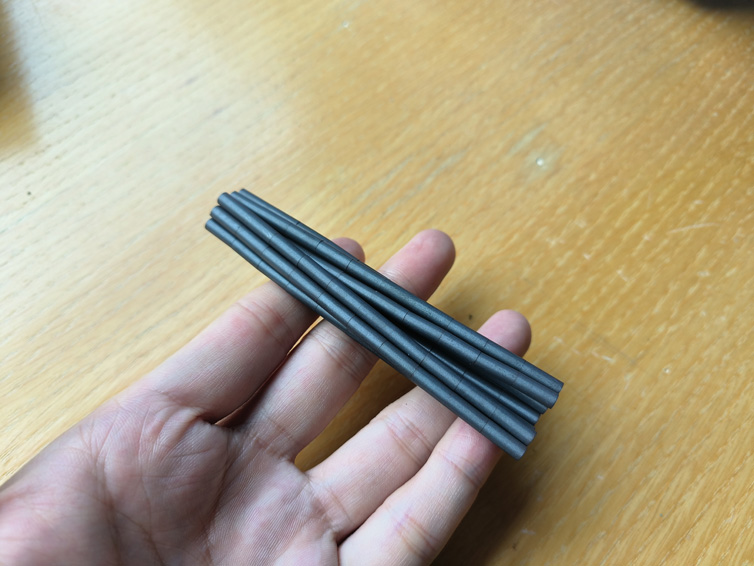
Illustration: Ceramic Cylindrical Ferrite Magnet
If the magnet is oriented downward, it can easily cause multiple issues. For instance, the lower part of the float becomes more susceptible to viscous resistance from the liquid, leading to reduced sensitivity in buoyancy. During rapid changes in liquid level, the float may experience lag or stalling, compromising measurement timeliness. Particularly in conditions involving agitation, inflow/outflow currents, or bubbles, a downward-facing float is more prone to oscillation, resulting in unstable signals.
The level gauge itself has a relatively simple structure, but installation details determine its performance. Installing the float magnet facing upward not only reduces mechanical resistance and interference factors, but this is especially critical for applications requiring long-term continuous liquid level monitoring.
Related Products;