 China Neodymium And Ferrite Magnets Manufacturer & Supplier



In mechanical assemblies and magnetic structures, placing magnets inside holes is a very common design approach. Compared to surface mounting, hole-mounted installation not only effectively restricts the magnet's displacement direction but also enhances the overall structural stability and aesthetics. So how should magnets be secured when placed inside holes?
For plastic material holes, the most commonly used method is press fit, which involves designing holes slightly smaller than the diameter of the magnet and using the elasticity of the plastic itself to press the magnet in, forming an interference fit. Adhesive bonding is also common, and you can choose 502 adhesive, epoxy resin adhesive, or hot melt adhesive. In addition, adding a buckle structure during the design phase of plastic parts, such as designing a reverse buckle or elastic buckle at the edge of the hole, can also achieve reliable fixation.
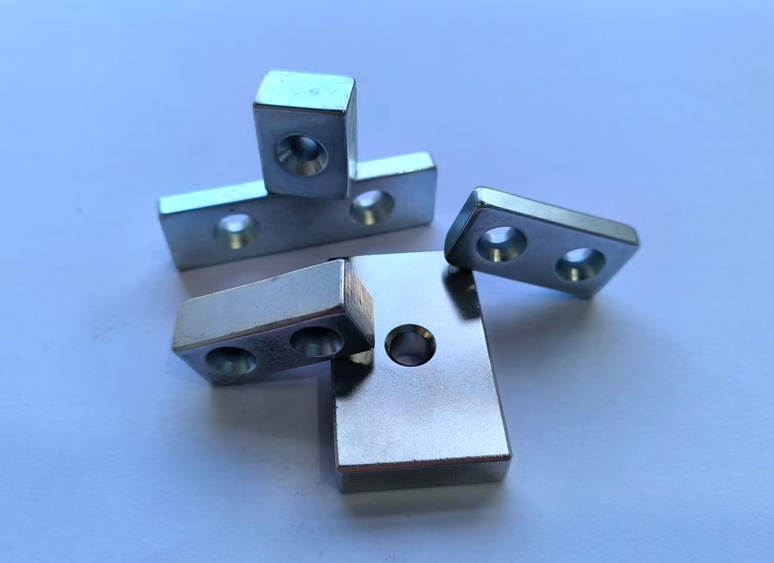
Magnets can be secured in wooden holes using woodworking-specific white glue or epoxy adhesive, with the latter offering greater strength. Additionally, screws are commonly used for fastening, requiring pre-drilled screw holes on the magnet's surface.
The image shows a rectangular neodymium magnet with screw holes. Additionally, countersunk holes in circular and square shapes are also commonly used.
What about metal holes? Adhesive bonding is the most versatile method. We recommend structural adhesives such as epoxy two-part adhesives or anaerobic adhesives, which offer strong adhesion and excellent durability on metal surfaces.
Glass holes often require the insertion of magnets. For glass holes, UV glue is a good choice as it is transparent and aesthetically pleasing, and can quickly cure under UV light without affecting the transparency of the glass.
The above outlines several common methods for securing magnets into holes. Regardless of the material or mounting technique chosen, it is essential to ensure that both the hole and the magnet surface are clean, dry, and free of grease. This directly impacts the bonding strength. If the magnet operates in a high-temperature environment, heat-resistant adhesive must be selected to prevent adhesive failure under elevated temperatures.
Related articles on magnet fixation;