 China Neodymium And Ferrite Magnets Manufacturer & Supplier



N35 magnets are one of the most commonly used grades of neodymium iron boron magnets. Whether they are subject to export controls is a question of widespread concern within the magnetic materials industry and foreign trade enterprises. Today, we'll explain this issue in simple, easy-to-understand terms.
Many people mistakenly believe that any neodymium iron boron magnet labeled as grade N35 is automatically subject to export restrictions. In reality, export controls are not determined solely by the magnet's performance grade. Instead, they are closely tied to the magnet's specific material composition, whether it contains restricted medium-to-heavy rare earth elements, and its actual application.
For standard N35 grade neodymium magnets, the composition typically consists of three elements: neodymium, iron, and boron, without additional heavy rare earth elements such as dysprosium (Dy) or terbium (Tb). These magnets generally withstand temperatures around 80°C and are widely used in home appliances, hardware, electronic components, packaging, and other fields. Based on current export regulatory practices, standard N35 magnets without medium-to-heavy rare earth elements are not subject to export controls and may be declared for export as ordinary industrial goods.
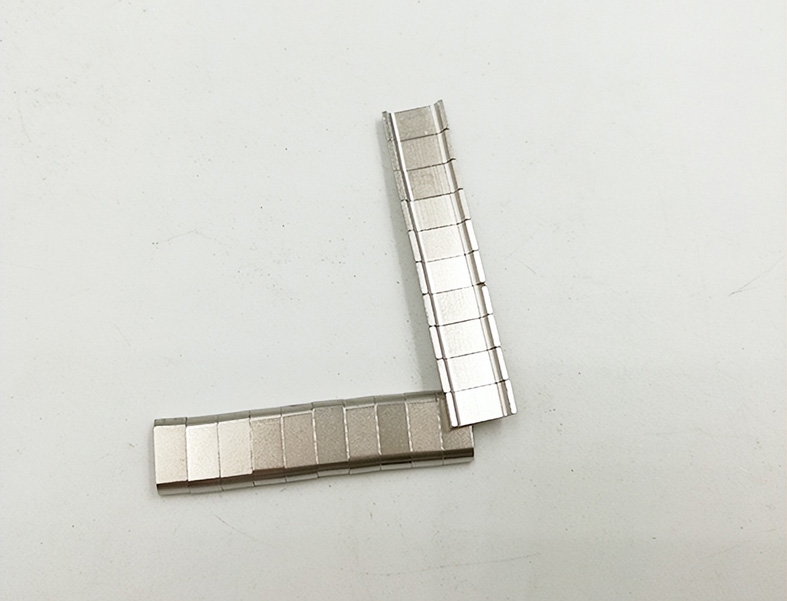
Custom-made U-shaped groove neodymium magnets
However, in certain applications, to enhance temperature resistance and demagnetization resistance, N35 magnets are manufactured into temperature-resistant grades such as N35SH and N35UH. These magnets typically achieve performance improvements by adding specific proportions of dysprosium or terbium—elements that are currently subject to stringent export controls under China's rare earth export management regulations. Once N35 magnets contain these medium-to-heavy rare earth elements—regardless of whether the concentration is 0.7% or 2%—they are classified as export-controlled items. Exporting such magnets requires obtaining a dual-use items export license.
Therefore, whether N35 magnets are subject to export controls hinges on whether they contain restricted medium-to-heavy rare earth elements. For companies exporting magnets, clearly identifying the magnet composition prior to shipment and preparing material specifications or test reports in advance are core measures to mitigate customs clearance risks and ensure compliant exports.
N35 related knowledge;