 China Neodymium And Ferrite Magnets Manufacturer & Supplier



In the production process of neodymium magnets, ferrite magnets, and similar products, there exists an indispensable yet often overlooked key piece of equipment: the magnetizing coil. Many people only notice that finished magnets “come with built-in magnetism,” without realizing how that magnetism is actually created. In truth, the magnetizing coil plays an indispensable role.
A magnetizing coil, also known as a magnetizing head, is a specialized coil device that generates an extremely powerful pulsed magnetic field in an instant for magnetizing permanent magnetic materials. Typically used in conjunction with a magnetizing power supply (magnetizing machine), it serves as one of the core process equipment in magnet manufacturing. In other words, the permanent magnets you use are not “naturally magnetic”—their magnetism is “imparted” by the magnetizing coil.
8 poles magnetizing coil
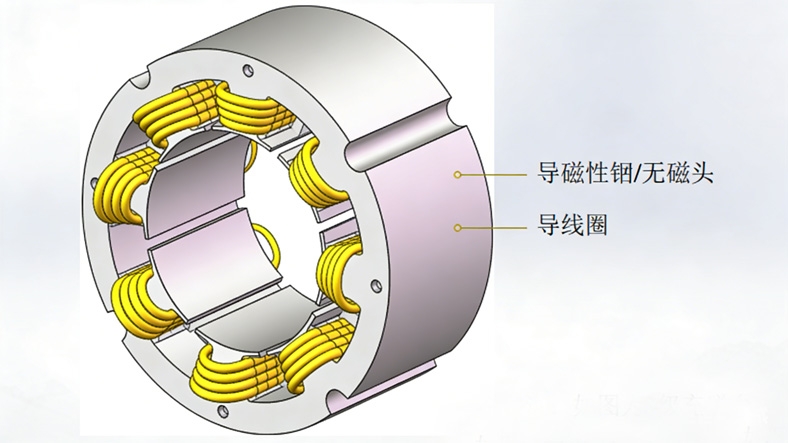
The fundamental principle of magnetizing coils is electromagnetic induction. The capacitor bank inside the magnetizing machine first stores a large amount of electrical energy, then discharges it instantaneously within milliseconds. A high current flows through the magnetizing coil, generating an extremely intense pulsed magnetic field within it. This forces the magnetic domains inside the magnet to align, forming a stable permanent magnet. For neodymium iron boron magnets, saturation magnetization can only be achieved when the magnetic field strength is sufficiently high.
The design of magnetizing heads is typically tailored to specific product requirements, such as axial magnetizing coils, radial magnetizing coils, multi-pole (inner diameter, outer diameter) magnetizing coils, and oblique magnetizing coils. To ensure effective magnetization and extend the service life of the magnetizing head, air-cooling or water-cooling systems are generally incorporated.
The above outlines key aspects of magnetizing coils, which serve as critical equipment determining the upper limits of magnet performance. Whether a magnet achieves saturation magnetization, possesses distinct and uniform magnetic poles, ultimately depends on the magnetizing coil and the magnetizing process itself.
Related articles;
How does multi-pole magnetizing coil magnetize a ring magnet?