 China Neodymium And Ferrite Magnets Manufacturer & Supplier



Regardless of the material, permanent magnets require magnetization to acquire magnetic properties. Some netizens may wonder why magnets exhibit varying magnetic strengths after magnetization.
First, we need to understand that magnets come in many different types, each with its own unique magnetic properties. Among these, magnets of different grades exhibit significant differences in magnetic energy product (i.e., the amount of magnetic energy the material can store). The higher the magnetic energy product, the stronger the magnetism after magnetization. For magnetic energy product parameters, you can refer to data sheets such as the neodymium magnet performance data sheet and the ferrite grade magnetic performance data sheet.
Image shows 1 inch half-circle strong magnets
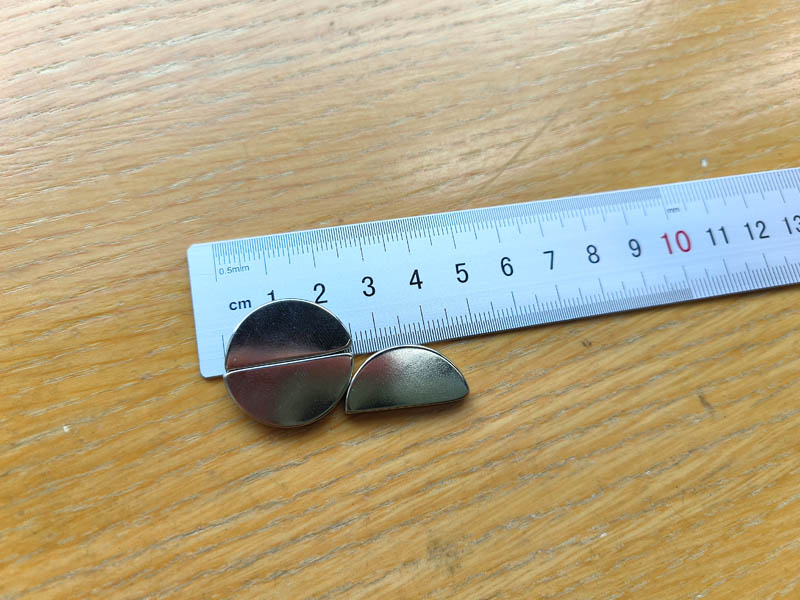
The magnitude of a magnet's magnetic energy product directly influences the amount of energy it can store after magnetization, and this energy capacity is closely related to magnetic field strength. Different magnetic steel materials exhibit varying magnetic field strengths after magnetization due to their differing magnetic energy products. For instance, certain magnet grades possess higher magnetic energy products, enabling them to generate stronger magnetic fields after magnetization, while other magnets may exhibit relatively weaker magnetic field strengths post-magnetization due to their lower magnetic energy products.
Beyond the magnetic properties of the ferromagnetic material itself, the shape and dimensions of a magnet also influence its magnetic strength. For instance, cylindrical magnets exhibit a relatively uniform magnetic field distribution, particularly when their length significantly exceeds their diameter, resulting in a smoother field distribution and more stable magnetic strength after magnetization. Ring magnets possess unique magnetic field characteristics, typically delivering highly uniform magnetic strength after magnetization. This enables them to demonstrate exceptionally efficient magnetic performance in motor and sensor applications.
In terms of volume, the larger the overall volume of a magnet, the greater the magnetic energy it can store. This means that larger magnets can generate stronger magnetic fields after magnetization. However, excessive volume may increase the difficulty of magnetization.
Anything else? Of course. Magnetic saturation also affects a magnet's magnetic strength. When a magnet is magnetized to saturation, its magnetic field strength reaches its maximum capacity. If saturation is uneven during magnetization or if the magnetization time is insufficient, certain areas may not achieve the desired magnetic field strength, thereby affecting the overall magnetic strength of the magnet.
The above is an introduction to the article title. I hope this information helps address your questions.
Related Articles Recommended;
Is there relationship between magnetization saturation and magnetization voltage?