 China Neodymium And Ferrite Magnets Manufacturer & Supplier



On our website, you will see many magnet shapes, such as round, circular, rectangular, square, curved, as well as customized special shapes. Have you ever wondered what determines the shape of a magnet?
In fact, the shape of a magnet is not arbitrary, but rather determined by the product's usage and magnetic field requirements.
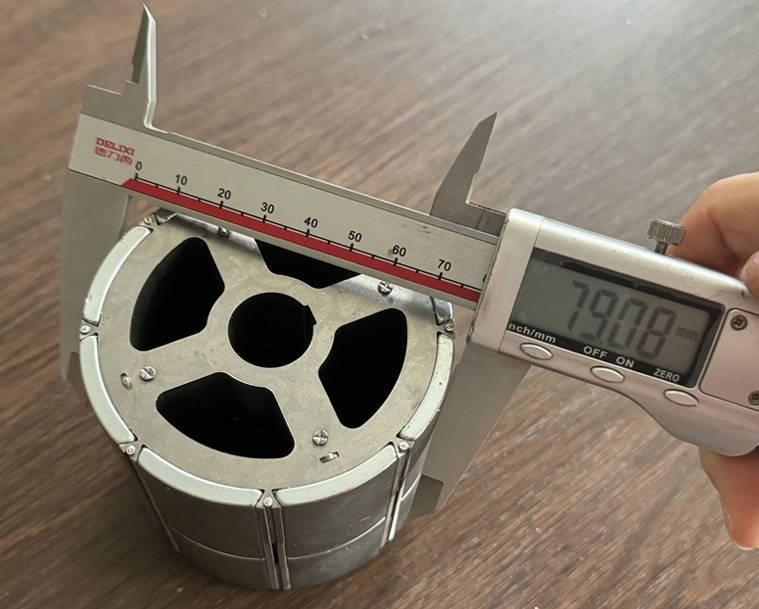
Firstly, the application scenario of the product determines the approximate shape of the magnet. For example, motors typically use arc-shaped magnets or radial magnetic rings to achieve higher magnetic field utilization. Encoders and Hall sensors often use multi-pole magnetic rings to achieve precise position detection, while magnetic attraction products often use round, square, or counterbored magnets for easy installation and fixation.
Arc segmented magnets are commonly used in motors
Secondly, magnetic field requirements are also an important factor affecting the shape of magnets. For example, when a 360° uniform magnetic field is required, a magnetic ring is usually chosen. When linear motion detection is needed, a bar magnet may be used. In situations where local magnetic force concentration is required, cylindrical or conical magnets are employed.
Finally, the shape of the magnet also needs to be adapted to the product structure and installation space. Sometimes, it is necessary to cut a groove, punch a hole, cut a corner, design multiple edges, or create special shapes for the magnet.
Therefore, the shape of a magnet is not determined by aesthetics, but rather by product functionality, magnetic field requirements, installation space, and manufacturing costs.
Introduction to relevant magnet shapes;