 China Neodymium And Ferrite Magnets Manufacturer & Supplier



Do deceleration motors require the use of magnets? Are you looking for a standard answer? Today's updated article will clearly introduce it to you.
To begin with the conclusion, the vast majority of modern gearmotors utilize magnets, but these magnets are primarily employed in the motor component rather than the gearbox component. This is because a gearmotor is essentially composed of two main parts: the motor and the gearbox. The motor is responsible for converting electrical energy into mechanical energy, while the reducer uses gear transmission to reduce the rotational speed and increase the output torque. In this combination, the role of magnets is primarily concentrated in the motor section, whereas the reducer is typically a purely mechanical structure that does not require magnets.
In modern reduction motors, especially permanent magnet DC motors (PMDC) and brushless DC motors (BLDC), magnets are almost indispensable core components.
3 pair 6 pole injection molded magnetic ring
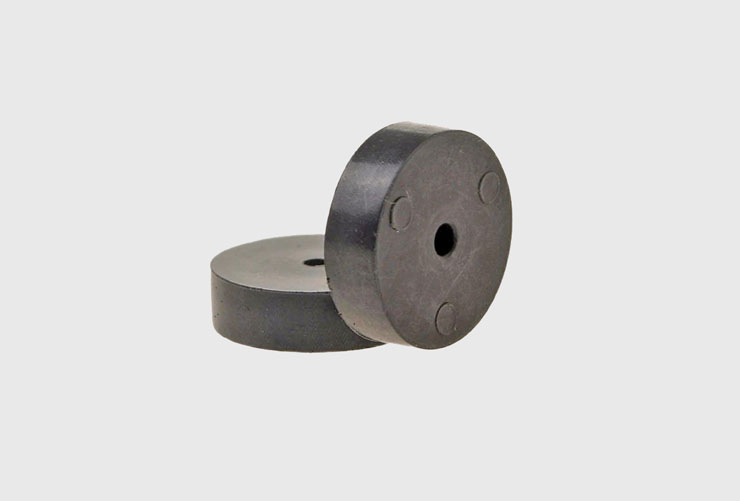
For example, in permanent magnet DC motors, permanent magnets are installed in the stator to generate a fixed magnetic field, which interacts with the electromagnetic field generated by the rotor windings to drive the rotor to rotate.
In brushless DC motors, magnets are installed on the rotor, which is driven by electronic commutation and the rotating magnetic field generated by the stator windings. These motors generally use neodymium-iron-boron magnets, which are small in size, have strong magnetic force, and are highly efficient.
Moving on to the reducer section, reducers primarily rely on gears (such as planetary gears, worm gears, parallel-axis gears, etc.) or other mechanical transmission mechanisms (such as harmonic drives) to achieve speed reduction and torque amplification. These gears and transmission mechanisms are purely mechanical structures that transmit force and motion through the meshing of teeth. In this speed reduction and torque multiplication process, magnets are not required at all. They rely on the physical contact and mechanical principles of metals or high-strength engineering plastics.
Reducer motors that use magnets: such as brushless DC reducer motors in household blenders and permanent magnet DC reducer motors in smart door locks.
Reducers that do not use magnets: such as the reducer part of three-phase induction reducer motors on industrial conveyor lines, which consist only of gears and bearings, with no magnets involved at all.
Why do many small reduction motors use magnets? This is because the permanent magnet design eliminates the need for excitation windings, reducing power consumption. High-performance neodymium-iron-boron magnets enable the motor to generate greater torque in a compact size, making it more suitable for low-voltage power supply applications (such as 12V, 24V).
The above is an introduction to whether reduction motors require magnets. Our company is a supplier of motor magnets and can provide motor magnets in a variety of materials and shapes. Please feel free to contact us for samples or prices.
Related motor magnet product categories;