 China Neodymium And Ferrite Magnets Manufacturer & Supplier



Neodymium magnets are widely used in motors, electrical appliances, hardware adsorption, electronic products, and daily necessities due to their strong magnetic force. With the increase in market demand, a large number of low-priced neodymium magnet products have appeared on the market, which are often referred to as “cheap neodymium magnets.” They can indeed meet the requirements of some low-end applications, but they also come with some issues that cannot be ignored.
1. What are low-cost (cheap) neodymium magnets?
“Low-cost neodymium magnets” refer to neodymium magnets that are sold at low prices on the market due to reduced raw material costs, simplified manufacturing processes, or defects in the production process. Their main characteristics include the following.
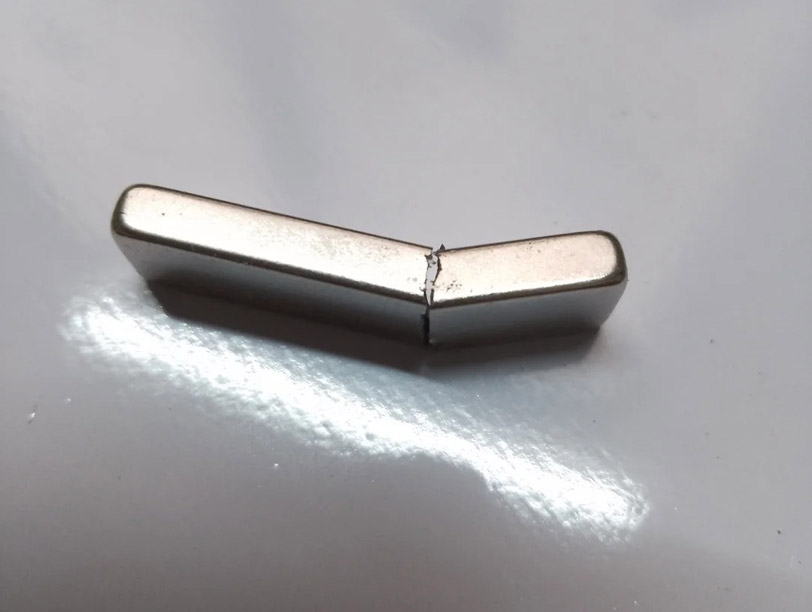
The accompanying image shows a broken neodymium block magnet.
Lower grade: Primarily low-grade magnets such as N25 and N28, with relatively average magnetic strength.
Simple coating: Typically uses cost-effective electroplating methods, resulting in thin coatings with limited corrosion resistance.
Rough manufacturing process: Dimensional accuracy and surface quality are inferior to high-end magnets, and may exhibit uneven edges or notches.
Complex material sourcing: Some manufacturers may use recycled rare earth materials or alloys with unstable compositions.
Although cheap neodymium magnets are affordable, they are prone to some issues, such as unstable magnetism, insufficient magnetic force, and increased susceptibility to rust. They also have low mechanical strength, are fragile, and exhibit large dimensional tolerances.
2. Things to note when purchasing inexpensive neodymium magnets;
Magnetic strength rating (N grade) mislabeling: This is the most common trap, such as labeling N35 when the actual rating may be N28.
Inaccurate dimensions/tolerances: For example, ±0.2mm or even larger tolerances can lead to installation difficulties.
Poor Coating Quality: Thin, uneven coatings with poor adhesion.
Poor Material Composition and Manufacturing Processes: May use recycled materials, low-purity raw materials, or inadequate production process control, resulting in loose internal structure, low magnetic performance, brittleness, and poor temperature stability (severe demagnetization at high temperatures).
Buying cheap neodymium magnets is essentially “trading risk for cost.” If you don't have high requirements for magnet performance and can accept a certain degree of uncertainty, then cheap magnets are feasible. However, if performance, precision, durability, or safety are critical, we strongly recommend increasing your budget and purchasing quality-assured products from reliable sources. After all, the money you save may pale in comparison to the trouble, risks, or accident costs caused by substandard magnets.
You may want to know: